character.ai

Staff Product Designer ·2023 – 2024

Growth and games on one of the most used AI products in the world.

Overview

Character.ai is one of the most used AI products in the world, and it runs on its own models. Nearly all of that use was one thing: open the app, pick a character, and chat. A deep habit, and a narrow front door.

I worked across two of those edges. Growth, where the job was giving people who had never heard of the product a reason to arrive and a reason to sign up. And games, where the job was turning a chat window into something you could actually play in.


Character profiles

Every character already carried a huge amount of context: who it was, how it spoke, what people did with it. None of that existed anywhere a search engine could reach it. Profiles turned each character into a real page — crawlable, rich enough to rank, and written so someone who had never used the product could tell within seconds whether they wanted to talk to this thing. I took two passes at it, one stripped to almost nothing and one closer to a listing page, and the answer landed between them.
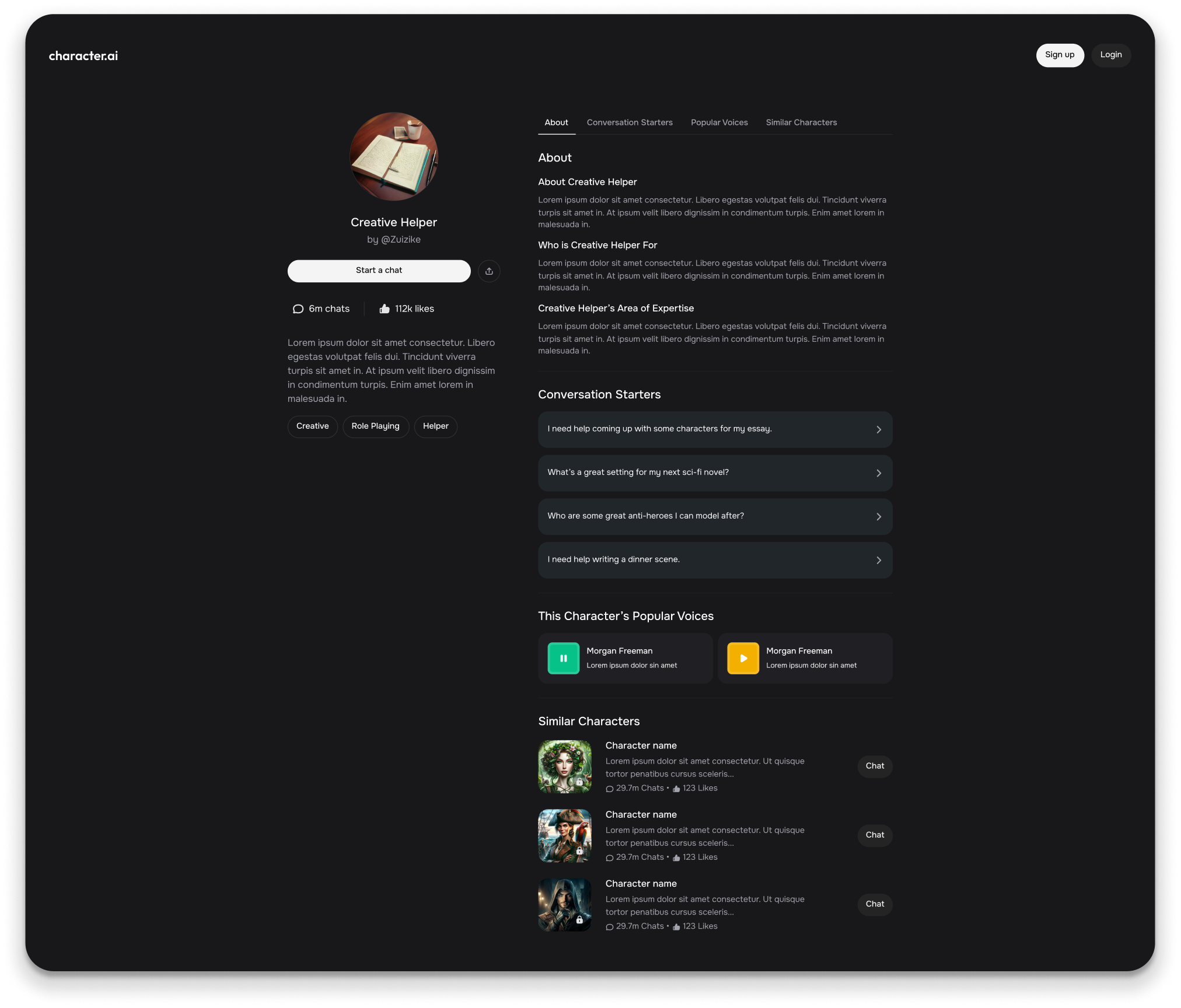
A character profile: about, conversation starters, voices, and similar characters

A new way in

The old sign-up was a wall of interface in front of a product that sells itself in one line. The new one is short and makes a single promise before it asks for anything. I built two landing experiences to find out which framing people actually responded to, then cut everything the winner did not need.

Games in the chat

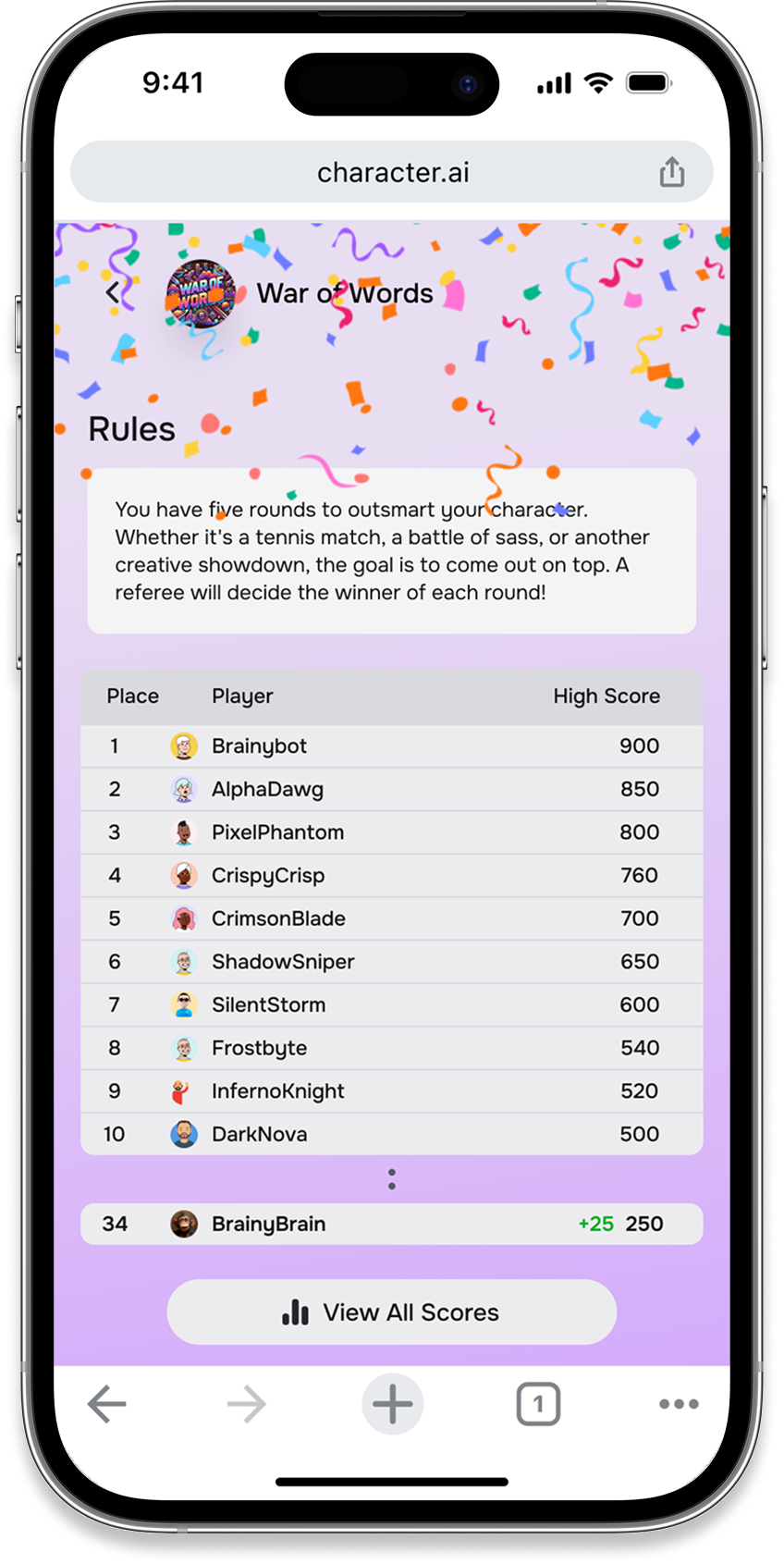
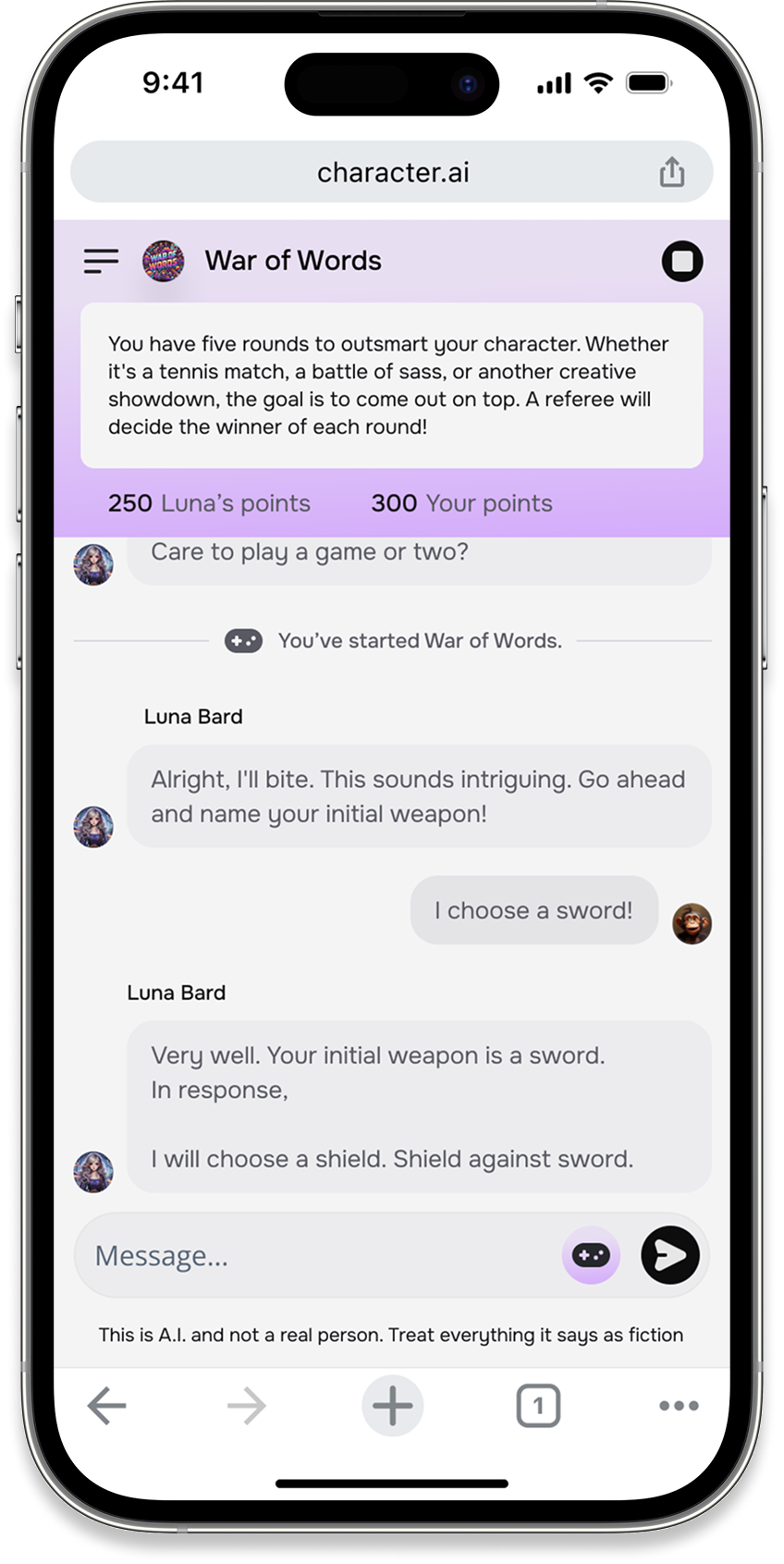
A group of engineers came to me with a question: what if you could play against your character? The mechanic was already there — your character is the opponent, a second model referees, you take turns and keep score. What was missing was everywhere a game could begin, any way to see how you were doing, and any sense that the referee was watching. So I designed the entrypoints, the leaderboards, and the tells that let the judge speak up mid-round. Most of the traffic is mobile web, so it had to work there first, not last.

A round of War of Words in progress, with the running score above the thread
The rules and high-score table for War of Words

Letting people build the games

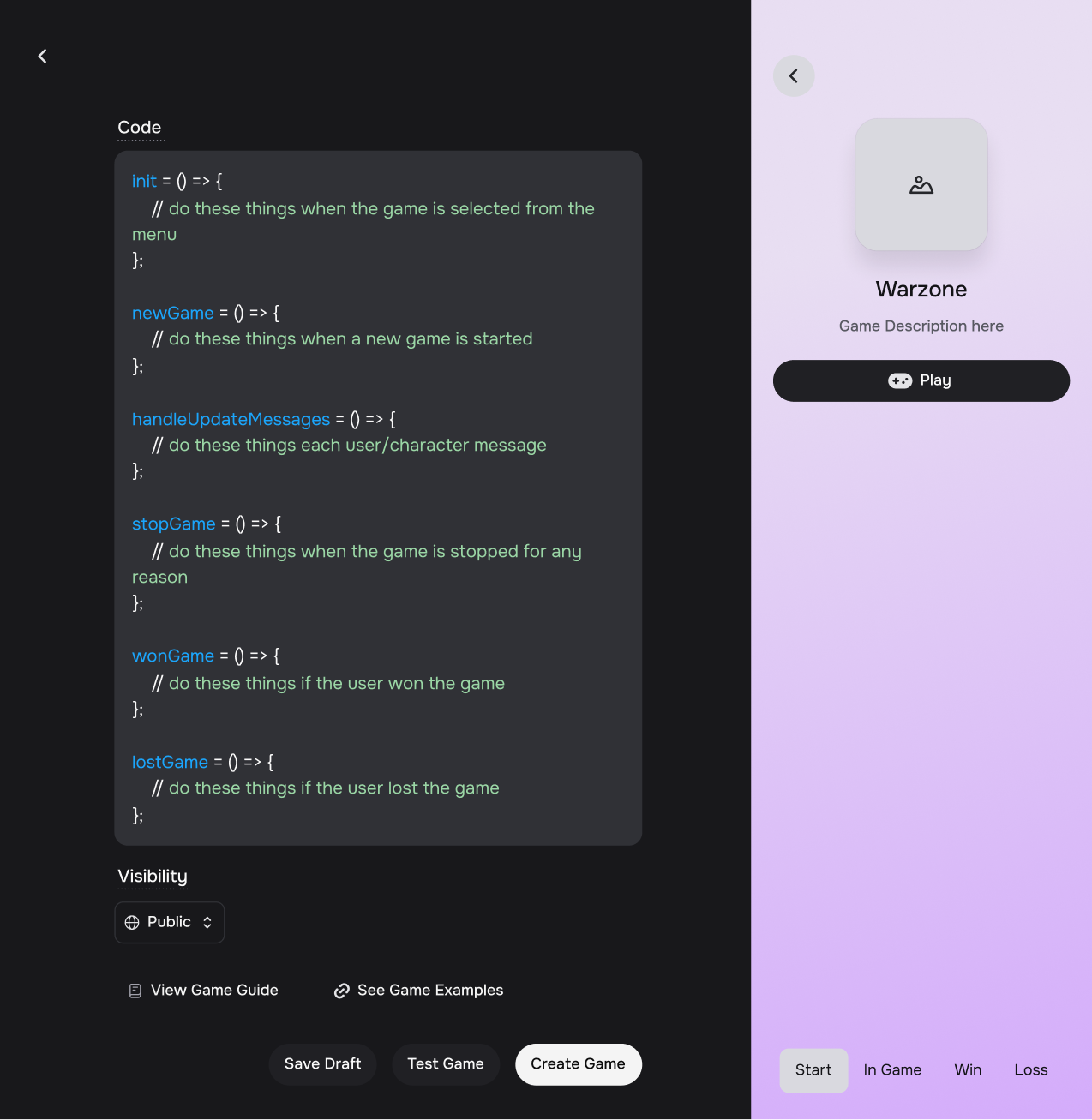
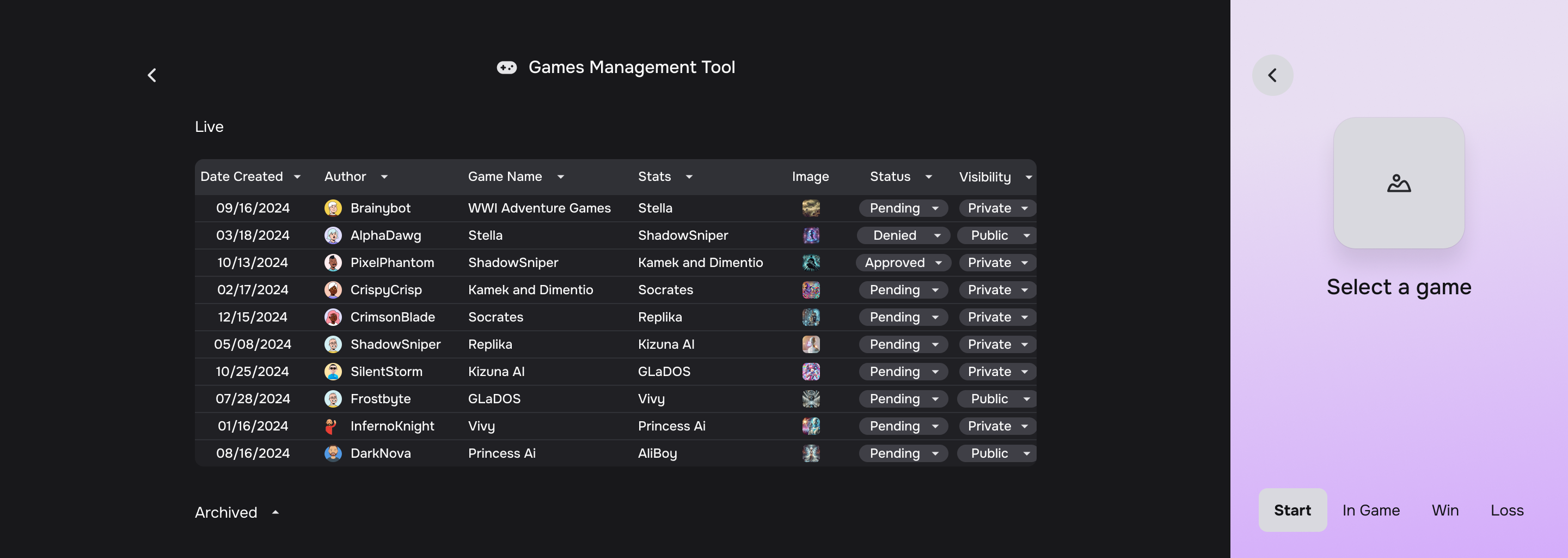
We are not games designers, and there are only so many games a product team will ever write. The obvious next move was to let the people who use the product submit their own — which needs two things nobody sees. A way to author a game: name it, describe it, say what winning and losing look like. And a way for us to read what came in and decide whether it ships.

Authoring a game's logic beside a live preview of the card players see
The submission form: name, description, win and lose states, and their artwork
The internal view for reviewing submitted games and their scores

Reception

Profiles moved traffic and sign-ups in the direction they were built to move them. Games went out on the web and got picked up in the press, which for a feature that started as a hallway idea is a good way to find out it was worth building.

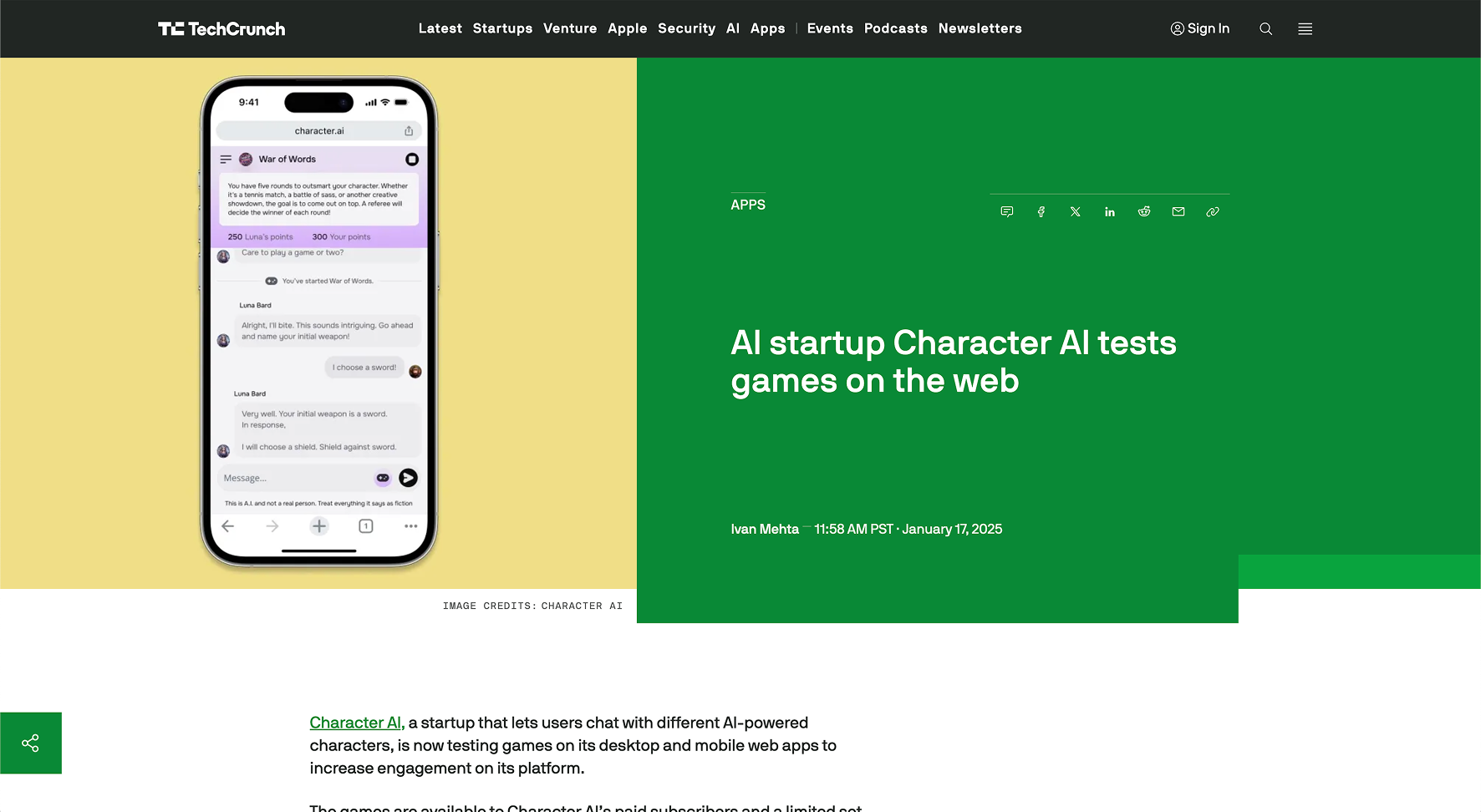
techcrunch.com/2025/01/17/ai-startup-character-ai-tests-games-on-the-web
TechCrunch covering character.ai testing games on the web

See it for yourself

Profiles and the sign-up flow are live. Games shipped on the web.